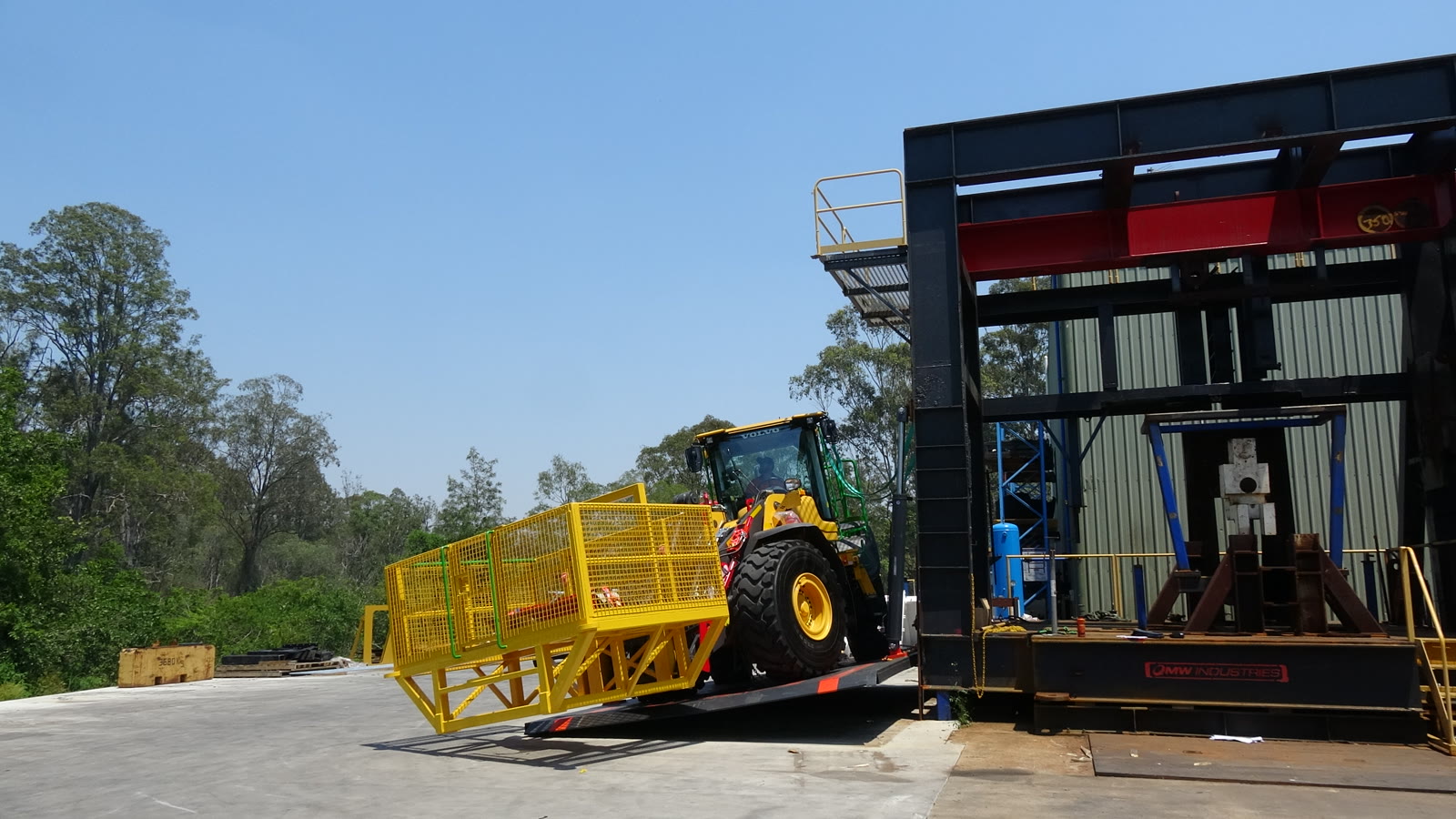
Wheeled loaders do a bit of everything in Australian underground hard-rock mines. Fitted with a man-basket, an integrated tool carrier can lift people to install services, charge blast holes and scale a face, with no separate elevating work platform or scaffold required. The productivity case is obvious.
The safety case is more demanding. The moment a loader carries personnel on a platform, it is a mobile elevating work platform (MEWP), and it has to meet the engineering and operational rules written for purpose-built lifts, not the rules for earthmoving plant.
One machine, two rulebooks
Australia has no single standard governing wheeled loaders used as MEWPs, so operators sit across overlapping obligations. Industry bodies point to two benchmarks:
- AS/NZS 1418.10 covers design and construction: static and dynamic stability, overload protection, emergency descent, dual-circuit load-holding valves, rated-capacity limiting and interlocked controls.
- AS 2550.10 covers safe use and maintenance: pre-start checks, routine inspections, six-monthly engineering reviews and ten-year major rebuilds, plus operator competence and record-keeping.
Boom platforms reaching beyond 2.4 m need design registration and periodic verification; lifting above 11 m requires the operator to hold a High-Risk Work (WP) licence.
Why it matters underground
Put a basket in the air and the machine's centre of gravity climbs with it. A minor irregularity in the floor can become a tip or a violent jolt, and tight underground clearances add crush risk between basket and back. Investigations into real incidents keep finding the same causes: non-compliant equipment, missing interlocks and inadequate inspection.
That's why a loader MEWP should be treated as a Group B, Type 2 platform: travel controlled from the base, speed held to a crawl, height limited and communication constant. In many cases, no movement while elevated remains the safest rule of all.
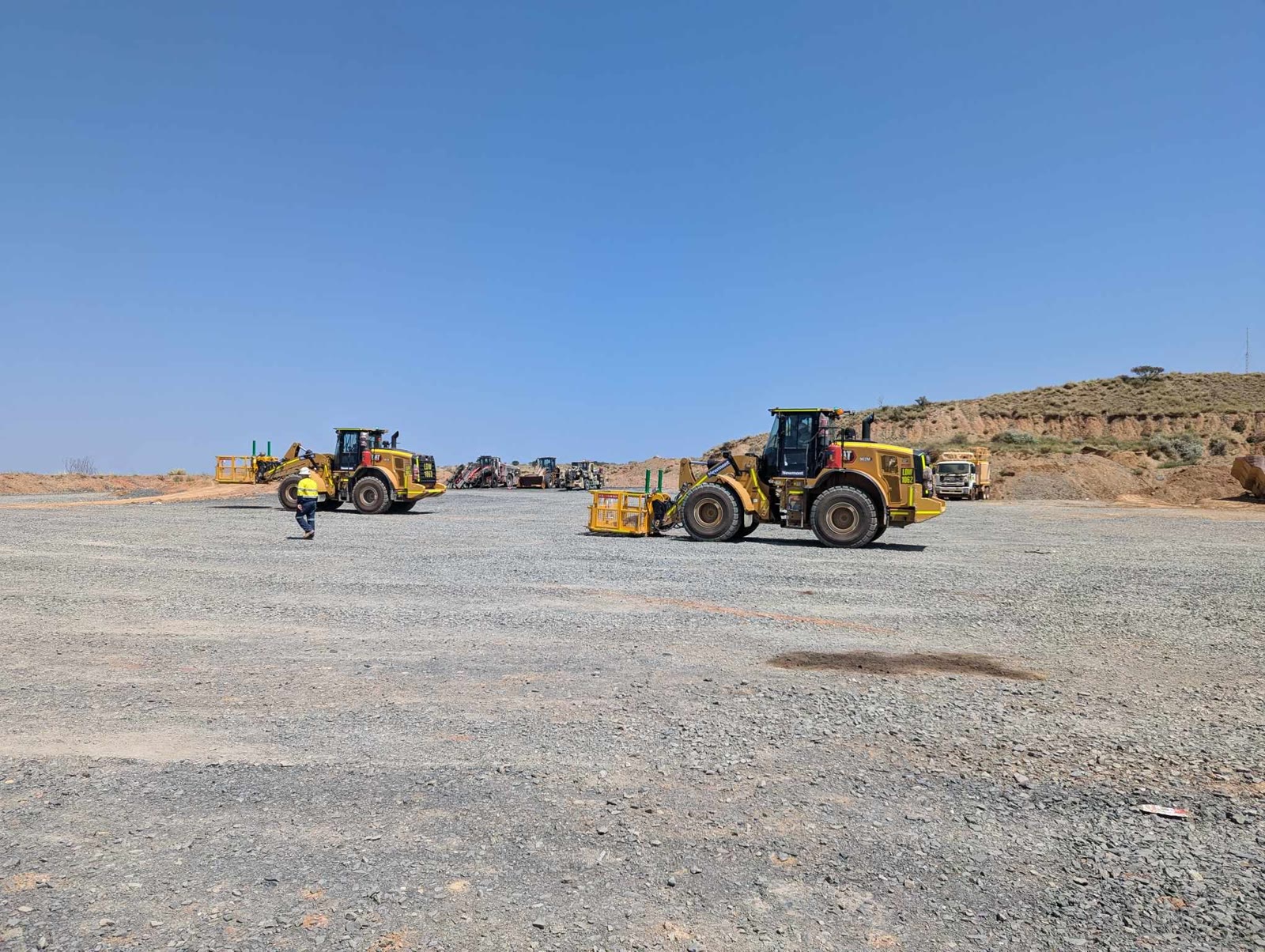 Integrated tool carriers on site: one machine, many jobs, and MEWP obligations the moment a platform goes on.
The Q-PILOT approach
QMW developed the Q-PILOT MEWP control system to build that compliance into the machine. It is an electro-hydraulic platform with dynamic stability monitoring, inclination sensing, load-sensing hydraulics, proportional controls and automated interlocks. Connect a work platform and the system recognises the attachment, limits ground speed to a crawl, disables unsafe functions and arms dual emergency-stop circuits.
With more than 200 installations across Australia and overseas, Q-PILOT has become a benchmark for engineered control on integrated tool carriers.
QMW backs every installation with the engineering to match: static and dynamic testing, design registration, certification and operator documentation, with 200% load testing to confirm the safety margin. Used as a work platform, a loader has to be engineered as a true MEWP, and that is exactly how we build them.